
Ransomware attacks are no longer rare events reserved for large enterprises or high profile organizations. They affect small and medium sized businesses every day, often with devastating consequences. While prevention is critical, recovery is where many businesses realize just how exposed they really are.
A successful ransomware recovery is not about luck. It is about preparation, visibility, communication, and having the right technical and operational foundations in place. Businesses that recover quickly tend to share the same habits, while those that struggle often repeat the same mistakes.
This article breaks down the most important ransomware recovery lessons every business should understand before an incident happens. These lessons are drawn from real-world incidents, industry research, and years of hands-on experience supporting organizations through cyber events.
Lesson 1: Ransomware Recovery Starts Before the Attack
One of the biggest misconceptions about ransomware recovery is that it begins after systems are encrypted. In reality, recovery success is largely determined by what was done weeks, months, or even years earlier.
Organizations that recover quickly typically have documented incident response plans, tested backups, and clear ownership over decision making. Those that do not often lose valuable time debating next steps while attackers remain in control.
Preparation includes knowing where critical data lives, understanding which systems are essential to operations, and defining who has authority to make containment and recovery decisions. Without this groundwork, even technically capable teams can struggle to regain control.
A written incident response plan should outline roles, escalation paths, communication protocols, and recovery priorities. It does not need to be overly complex, but it must be accessible and understood before an incident occurs.
Lesson 2: Backups Are Only Useful If They Are Tested and Isolated
Almost every business believes it has reliable backups. Unfortunately, many discover during a ransomware incident that those backups are incomplete, outdated, or compromised by the same attack. Effective backup strategies follow three core principles. They are frequent, isolated, and tested.
Frequent backups reduce the amount of data lost during an attack. Isolation prevents ransomware from encrypting or deleting backup copies. Testing ensures backups can be restored within acceptable timeframes when systems are down.
Many ransomware groups actively search for connected backup systems before deploying encryption. Once found, they attempt to delete or corrupt them. Backups that remain permanently connected to production networks often provide little protection in these situations. Businesses that recover successfully typically use a combination of local and cloud based backups with strict access controls, defined retention policies, and limited connectivity.
According to the Verizon Data Breach Investigations Report, organizations with well maintained and tested backups experience significantly less downtime and lower recovery costs after ransomware incidents.
A strong backup strategy includes several key elements.
Offline and Immutable Backups
Backups should be stored separately from primary systems so attackers cannot access or encrypt them. Immutable backups add an extra layer of protection by preventing data from being altered or deleted once it is written.
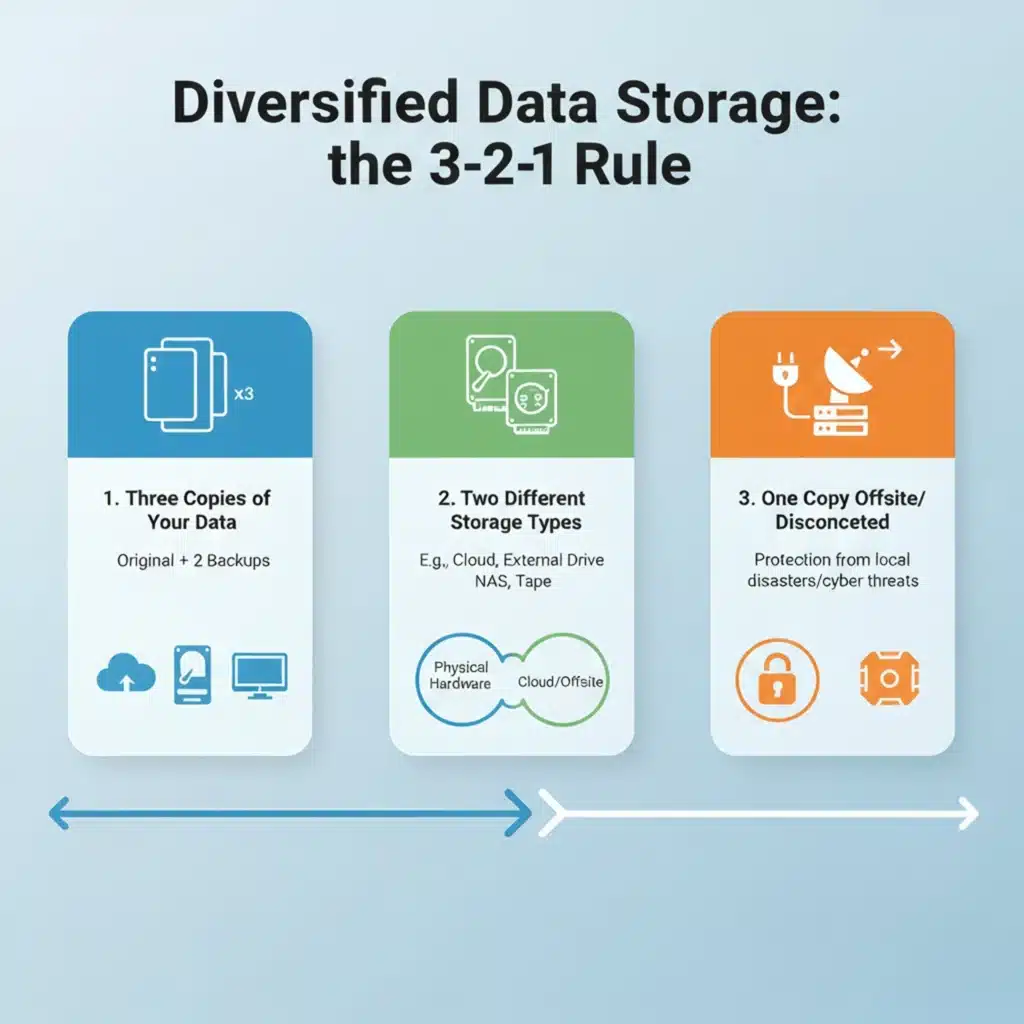
Diversified Storage Using the 3 2 1 Rule
Security experts recommend maintaining three copies of data, stored on two different types of media, with one copy kept offsite or disconnected from the network. This approach reduces the risk of a single failure or attack impacting all backups.
Regular Backup Testing
Backups are only valuable if they can be restored quickly and safely. Regular testing confirms data integrity, validates recovery timelines, and exposes issues before they become critical during an actual incident.
Lesson 3: Paying the Ransom Does Not Guarantee Recovery
The decision to pay a ransom is complex and often emotional. Many businesses believe paying guarantees fast restoration, but this assumption is risky.
Even when attackers provide decryption keys, recovery is rarely instant. Decryption tools may fail, data may be corrupted, and systems often require rebuilding to ensure attackers no longer have access.
There is also no guarantee attackers will honor their promises. Some victims receive incomplete keys, while others experience repeat attacks after payment because they are seen as willing targets.
Law enforcement agencies consistently advise caution when considering ransom payments. Paying may also raise legal and compliance concerns depending on the attacker group involved.
Recovery planning should assume that payment may not result in full restoration. The safest strategy is to build recovery capabilities that do not rely on attacker cooperation.
Lesson 4: Speed of Detection Directly Impacts Recovery Complexity
The earlier ransomware activity is detected, the easier recovery becomes. Attacks that go unnoticed for days or weeks often involve data exfiltration, credential theft, and lateral movement across systems.
Modern ransomware attacks are rarely instant. Attackers often spend time mapping the environment, escalating privileges, and disabling defenses before encrypting files.
Organizations with centralized monitoring, endpoint detection, and alerting mechanisms tend to identify suspicious behavior earlier. This allows them to isolate affected systems before widespread damage occurs.
Early containment can mean the difference between restoring a handful of systems and rebuilding an entire network.
The Cybersecurity and Infrastructure Security Agency emphasizes the importance of early detection and segmentation in limiting ransomware impact and improving recovery outcomes.
Lesson 5: Communication Matters as Much as Technology
Ransomware incidents affect more than servers and endpoints. They disrupt employees, customers, vendors, and leadership teams. Poor communication can amplify damage and erode trust.
Clear internal communication helps employees understand what systems are affected, what actions to avoid, and how to continue operations safely. External communication ensures customers and partners receive accurate information instead of speculation.
During recovery, leadership teams should provide regular updates, even if progress is slow. Silence often creates confusion and frustration.
Having pre approved communication templates and designated spokespeople reduces delays and minimizes conflicting messages. This is especially important if legal, regulatory, or public disclosure requirements apply.
Lesson 6: Recovery Is an Opportunity to Fix What Was Broken
While ransomware incidents are disruptive, they also expose weaknesses that may have gone unnoticed for years. Businesses that treat recovery as a reset often emerge stronger.
Common improvements implemented during recovery include tighter access controls, stronger password policies, improved patch management, and better employee security training.
System rebuilds provide an opportunity to remove outdated software, clean up unused accounts, and improve network segmentation.
Rather than rushing to restore systems exactly as they were, organizations should prioritize secure rebuilds that reduce future risk.
The National Institute of Standards and Technology highlights the importance of post incident reviews and system hardening as part of long term cyber resilience.
Lesson 7: Employee Training Plays a Major Role in Recovery Success
Many ransomware attacks begin with phishing emails or compromised credentials. Employees who recognize suspicious activity early can significantly limit damage.
Training employees to report unusual behavior quickly helps security teams respond before attackers escalate. This includes reporting unexpected login prompts, suspicious attachments, or system slowdowns.
Recovery is also smoother when employees understand temporary workarounds and security expectations during an incident.
Security awareness training should be ongoing and realistic, not a one time exercise. Businesses that invest in training often experience fewer repeat incidents after recovery.
Lesson 8: Not All Downtime Is Technical
Even after systems are restored, operational recovery can lag behind. Data validation, user access restoration, and workflow testing all take time.
Businesses should plan for phased recovery, prioritizing revenue generating and customer facing systems first. Clear recovery priorities reduce confusion and help teams focus on what matters most.
Documenting dependencies between systems prevents restoring components in the wrong order, which can delay operations further.
Understanding that recovery includes people, processes, and technology leads to more realistic timelines and better outcomes.
Lesson 9: Managed IT and Security Support Improves Recovery Outcomes
Many organizations lack the internal resources to manage ransomware recovery alone. External support can provide technical expertise, incident coordination, and objective guidance during high stress situations.
Managed IT providers often bring experience from multiple incidents, allowing them to anticipate challenges and avoid common mistakes.
They also help businesses transition from reactive recovery to proactive resilience by implementing long term improvements after the incident.
For many organizations, the cost of ongoing support is far less than the cost of extended downtime, lost data, and reputational damage.
Recovery Is a Business Strategy, Not Just an IT Task
Ransomware recovery is not something to figure out in the middle of an emergency. The strongest recoveries happen when planning, backups, monitoring, and response processes are already in place.
If you are unsure how quickly your business could recover from a ransomware attack, now is the right time to assess your readiness. Reviewing your backups, response plan, and security controls today can prevent days or weeks of disruption later.
If you want help evaluating your recovery strategy or strengthening your cyber resilience, our team is here to help you take the next step with confidence.